AC Exhaust Adapter (and thinking about tool malleability)
The new air conditioning unit at the gym had an exhaust setup that was attached with zip ties. Most of the warm air was leaving the space, but there was room for improvement.
Cuttle's 3D export has intential limitations, so I couldn't use that directly. Instead, I measured the parts and modeled 2D cross-sections.
The part measurements are set up as project parameters.
| Name | Value |
|---|---|
| outerCircumference | 725 mm |
| outerDiameter | outerCircumference/PI |
| innerCircumference | 496 mm |
| innerDiameter | innerCircumference/PI |
| pillOuter | Vec(78, 165) mm |
| pillLip | 5 mm |
| pillInner | pillOuter - pillLip*2 |
| outerExpand | 20 mm |
You can see how my parameters use Cuttle-flavored JavaScript: they have units, and you can do math with Vec values, for example the pillInner calculation.
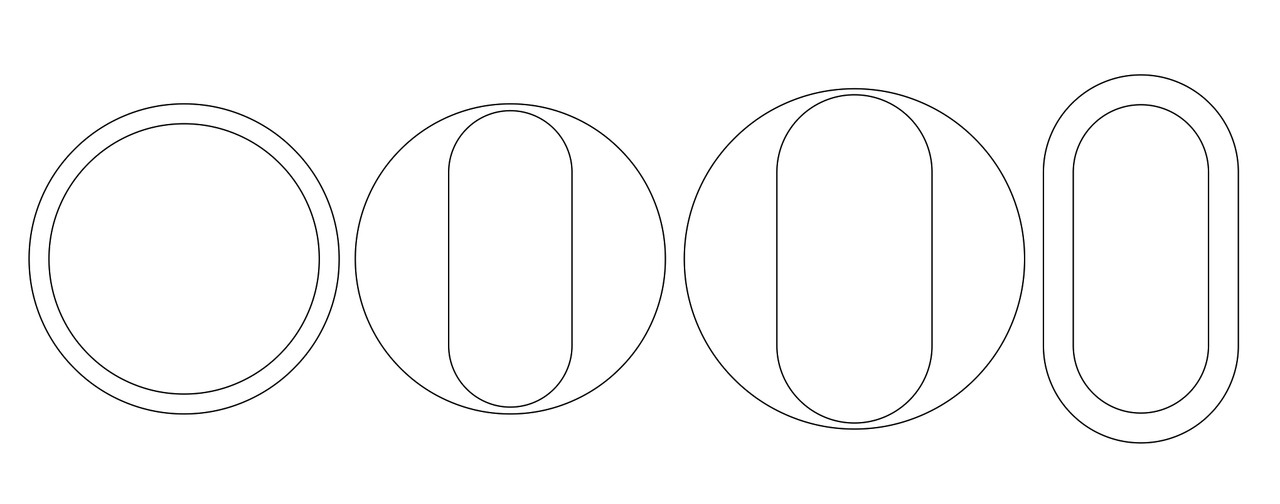
The modeling is simple, starting with the section that fits in the exhaust pipe. The part that connected to the exhaust hose was a little more complex because outer height of the "pill" part is a little bigger than the inner diameter of the pipe.
But how can we turn these 2D drawings into a 3D shape? By making a quick mini app, called loft-svg. You can copy SVGs from Cuttle, and paste them into the app, and it "lofts" each shape to the next, with parameters for each section.
Cut the model in Prusa slicer, and print on 2 printers at once at the Fablab.
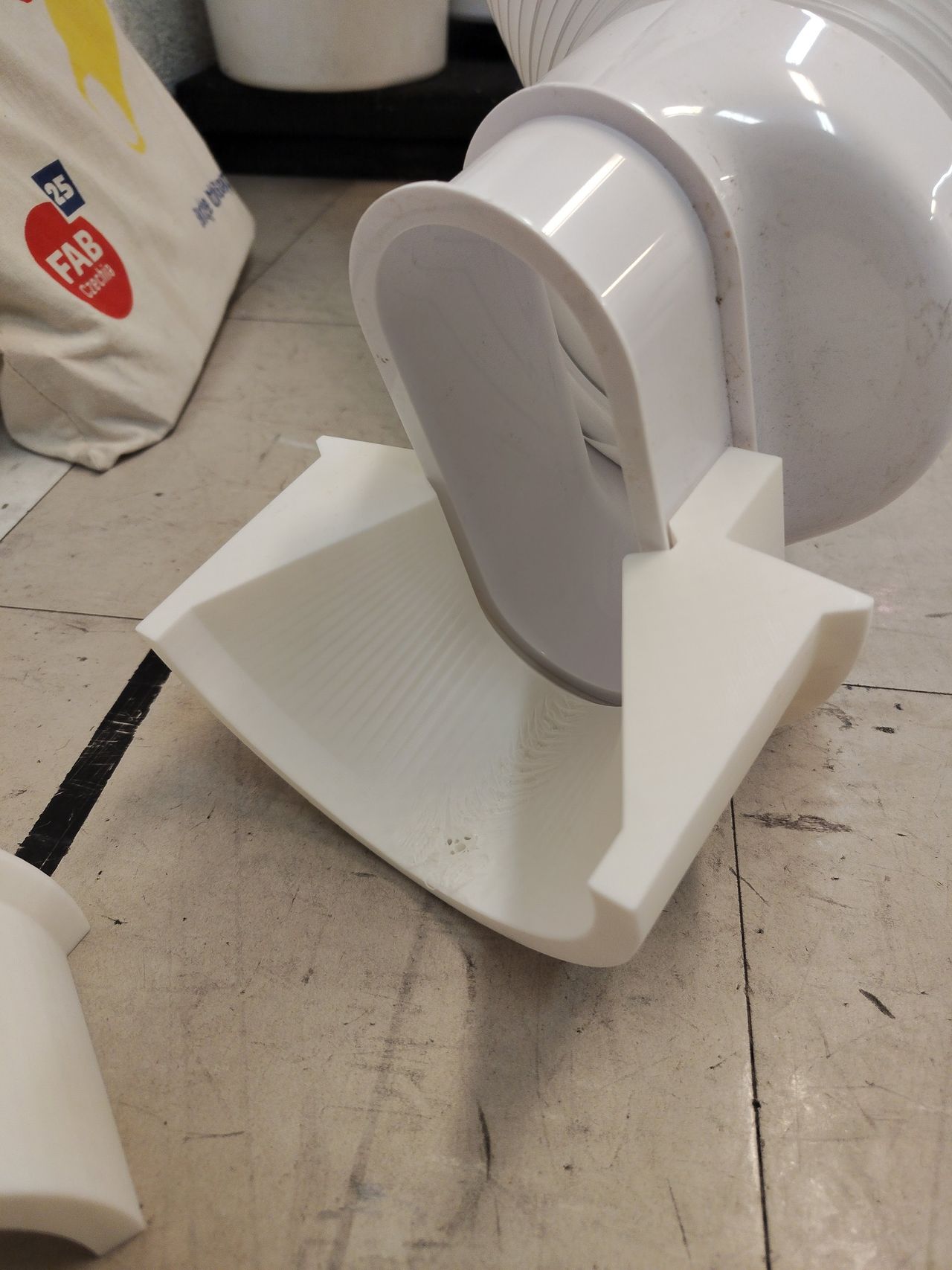
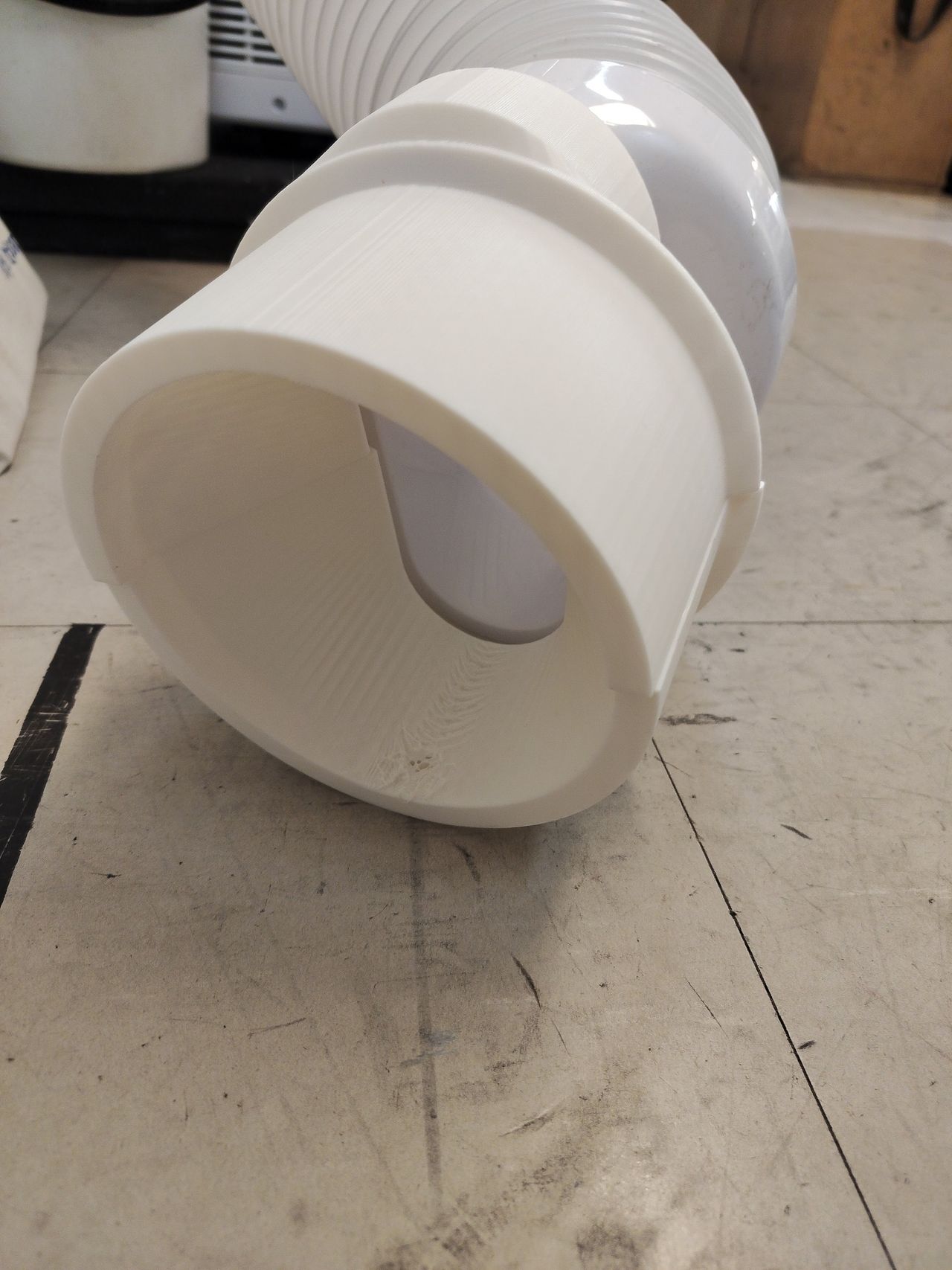
I was happy that it fit!
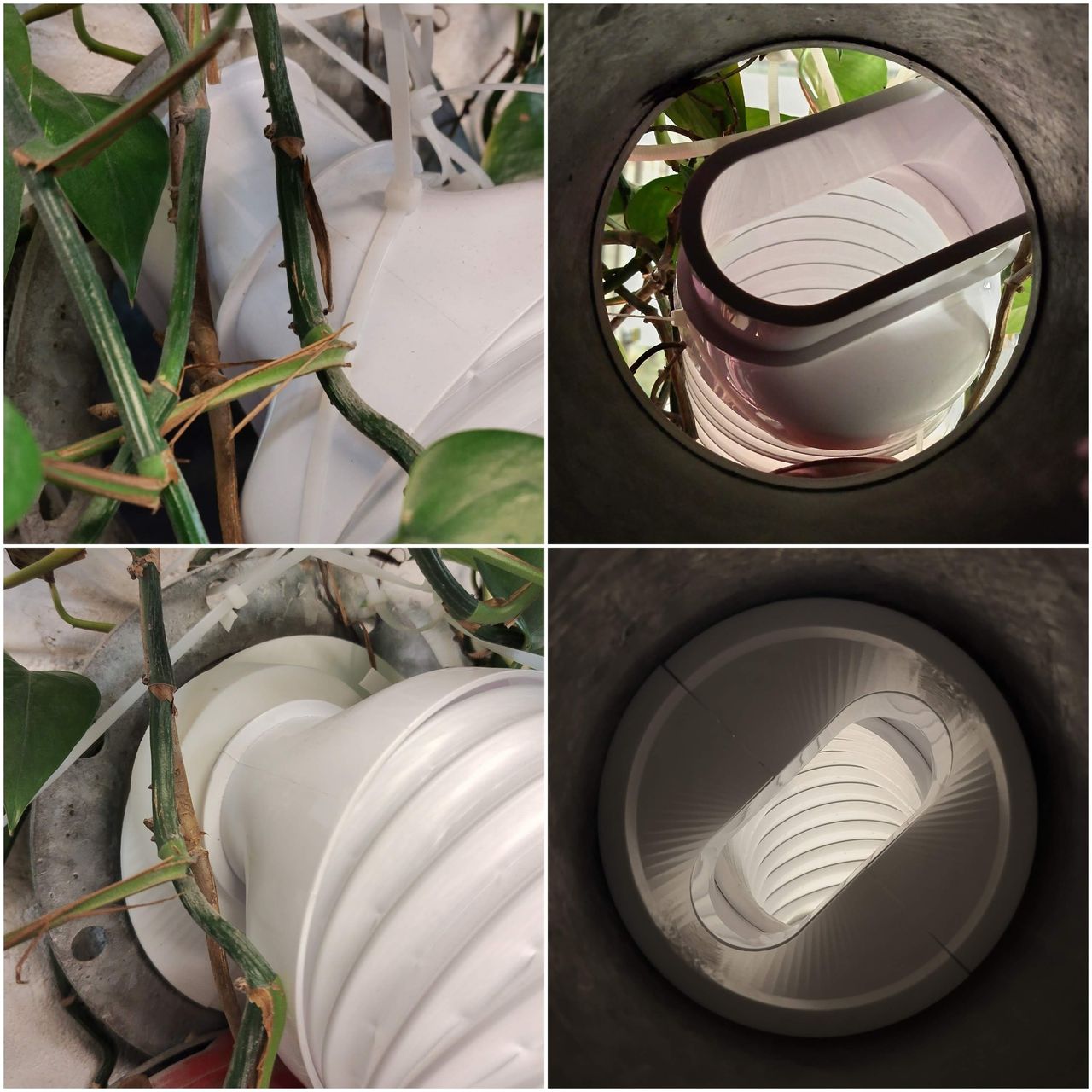
Before and after, inside and outside.
There's something really satisfying about making something fit better, and work better. When you have a hammer, every problem looks like a nail. The hammer that I had in mind was a 3D printer, but also working on Cuttle makes me want to solve design problems with that tool.
So malleability...
- in the real world, to fit exhaust to the vent,
- and to fit the 2D tool to the 3D domain.
- ← Previous
Tactile Labyrinth